What Tax Band Is My Car by Reg in the UK?
Find your car tax band by registration, understand what the result means, and learn when registration date, CO2, and list price change what you pay.
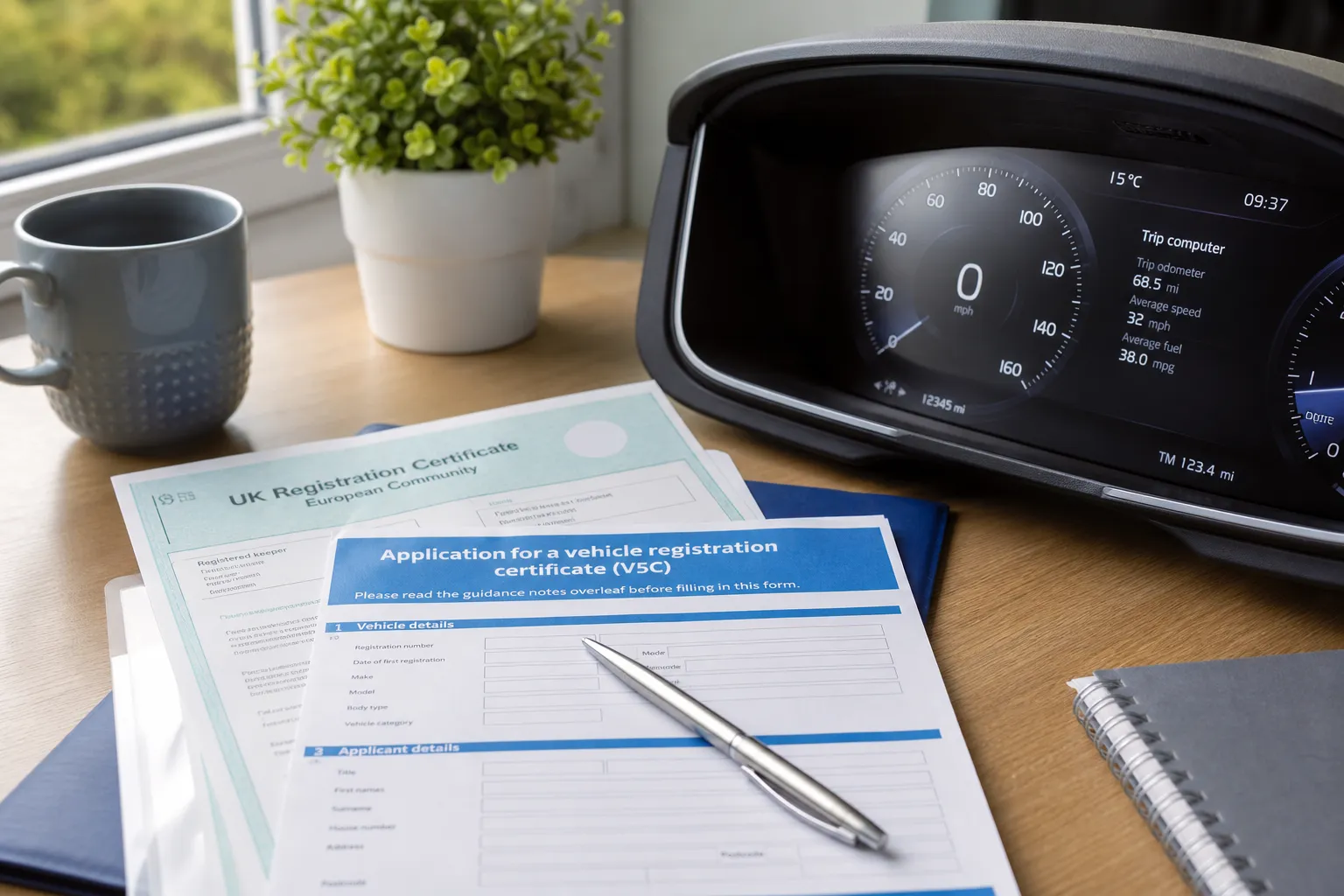
If you have been asking what tax band is my car by reg, you are usually trying to answer a simple money question. How much will this car cost to keep taxed, and why does one vehicle seem to cost more than another even when they look similar on paper?
The quickest route is to use the official GOV.UK vehicle tax checker and enter your registration number. That tells you whether the car is taxed and helps you get to the current tax rate for that vehicle. The key detail, though, is that the registration itself does not create the tax band. It simply pulls up the DVLA record that already contains the details that matter.
In practice, your car tax band depends on a mix of factors including when the car was first registered, its CO2 emissions, fuel type, and in some cases its original list price. That is why checking by reg is useful. It cuts through the guesswork and shows the rate tied to the exact vehicle record rather than the broad model name.
The Quick Answer
To find your car tax band by registration in the UK:
- Go to the official vehicle tax checker.
- Enter the registration number.
- Review the vehicle status and current tax information shown for that exact car.
- If you want to understand why it costs that amount, check the first registration date, fuel type, CO2 figure, and whether the car falls under pre-April-2017 or post-April-2017 rules.
What “Car Tax Band by Reg” Actually Means
People often talk about a car tax band as if the number plate itself decides the charge. It does not. The plate is just the lookup key. Once you enter it, the DVLA system can pull the vehicle record and show the tax position attached to that exact car.
That matters because UK vehicle tax rules have changed over time. A car first registered on 31 March 2017 can be under a different structure from a near-identical car registered on 1 April 2017. Electric cars have changed too. Since 1 April 2025, zero-emission cars have been brought into the vehicle tax system, so many EV drivers now need to check rates rather than assume the answer is still zero.
So when someone asks, “What tax band is my car by reg?”, the practical question is really this: what tax system does my specific vehicle fall into, and what does that mean for what I pay now?

How to Check Your Car Tax Band by Registration
The easiest method is the official one. Use GOV.UK’s vehicle tax checker and enter your number plate. You only need the registration number to see whether the vehicle is taxed or off the road with a SORN, and GOV.UK also says the service can be used to check the current tax rates for your vehicle. If you have just taxed the car or made a SORN, the record can take up to 2 working days to update after approval.
If you want the shortest version possible, the process is:
- enter the reg
- check the current tax status
- look at the tax amount shown for that vehicle
- compare the registration date and emissions details if you want to understand the rule behind the number
If your goal is simply to confirm whether the car is currently taxed, our guide to checking if your car is taxed goes into that in more detail.
The Main Factors That Decide Your Car Tax Band
Once you look beyond the registration lookup, four factors do most of the heavy lifting.
- First registration date. This is one of the biggest dividing lines because older cars and newer cars sit under different tax rules.
- CO2 emissions. For many vehicles first registered between 1 March 2001 and 31 March 2017, the band is linked to the car’s CO2 figure.
- Fuel type. Petrol, diesel, alternative fuel, and zero-emission vehicles can be treated differently depending on the rules in force for that registration period.
- List price. Some newer cars can attract the expensive car supplement if the list price at first registration was above the threshold.
That is why guessing from engine size alone often goes wrong. Two 2.0-litre cars can sit in different tax positions if one was registered under the older emissions bands and the other under the newer flat-rate system.
Cars Registered Between 1 March 2001 and 31 March 2017
This is the period where many drivers still think in terms of classic lettered tax bands. GOV.UK says the rate for cars first registered in this window is based on fuel type and CO2 emissions. The official tables run from Band A up to Band M. For example, Band A covers cars up to 100g/km of CO2, while higher-emission cars move up the scale and pay more.
As of the current GOV.UK rates page, the annual charge for cars in this older banded system ranges from very low rates in the lowest bands to much higher charges in the top bands. The exact number depends on the emissions figure tied to your specific car and, in some cases, its fuel classification.
If you have the V5C log book, the CO2 figure is often shown there. GOV.UK also publishes official car fuel and CO2 emissions data, which is useful if you want to understand why a particular vehicle lands in a certain older tax band.
Cars Registered On or After 1 April 2017
This is where a lot of confusion starts. Cars first registered on or after 1 April 2017 are generally not taxed through the same A-to-M structure that older cars use. Instead, they follow the newer vehicle tax rate rules, which include a first-year rate and then an ongoing standard rate after that.
In plain English, that means a 2018 car is often better thought of as being under the post-2017 tax system rather than sitting neatly in one of the older lettered bands.
There are two practical consequences of that:
- the first year can differ based on emissions at first registration
- later years usually move onto a standard annual rate, with an extra supplement in some cases for higher-list-price cars
So if your registration check shows a rate that does not seem to match the older A-to-M tables, the most likely reason is that the car is under the newer rules, not that the checker is wrong.
What About Electric Cars?
Electric vehicles have become one of the biggest sources of tax confusion. Many drivers still think EVs are simply exempt. That was a useful rule of thumb for a while, but it is no longer fully accurate.
GOV.UK’s current rates say zero-emission cars were brought into the vehicle tax system from 1 April 2025. The detailed V149 rates published for 1 April 2026 onward show that zero-emission cars registered on or after 1 April 2025 have their own first-licence treatment and can then move onto the standard rate after that. Older EVs can also now face ongoing annual charges depending on when they were first registered.
That means if you are checking an electric car by reg in June 2026, you should not rely on old assumptions. Use the reg checker and look at the actual rate for that car.
Why Two Similar Cars Can Have Different Tax Bands
This is one of the most frustrating parts of UK motoring costs. You can compare two cars that look nearly identical and still end up with different tax amounts.
The usual reasons are:
- one was first registered before 1 April 2017 and the other after
- their CO2 figures are slightly different
- one has a higher original list price and triggers the supplement under newer rules
- fuel type or technical specification puts them in different categories
This is why the registration check is so useful when buying used. It helps you move from broad assumptions about a make and model to the exact tax treatment of the car in front of you.
For an even wider admin check before buying or renewing, it also helps to look at MOT and insurance timing. Our guide to checking tax and MOT together can help you spot whether the car’s key annual costs are about to bunch up.
Can You Work Out the Tax Band Without the Registration Number?
Sometimes, but it is less reliable. If you know the car’s exact first registration date, fuel type, CO2 figure, and whether it falls under the older or newer rules, you can usually estimate the tax category from the official tables. The problem is that most drivers do not have every one of those details to hand, and small differences can matter.
That is why checking by reg tends to be quicker and safer. It is not because the plate contains secret tax information. It is because the number plate pulls up the exact record instead of making you piece it together manually.
Common Mistakes When Checking Car Tax Bands
Most errors come from mixing different tax systems together. The most common mistakes are:
- assuming all cars use the old lettered bands
- guessing from engine size instead of emissions and registration date
- assuming EVs are still automatically tax-free
- looking at a model range instead of the exact registered vehicle
- forgetting that records can take up to 2 working days to update after a tax or SORN change
A good habit is to treat tax as part of one admin bundle. If you are already checking the car by reg, it is a good moment to look at MOT, insurance renewal, and any planned maintenance too.

A Simple Checklist Before You Buy or Renew
If you want a practical pre-purchase or renewal routine, use this:
- Check the vehicle by registration on GOV.UK.
- Confirm whether it is currently taxed or recorded as off road.
- Look at the current tax amount for that exact vehicle.
- Check the first registration date so you know which rule set applies.
- Review MOT status and next due date.
- Budget for insurance renewal at the same time.
If the car is being sold or taken off the road, remember the tax side has to be updated properly too. Our guide on how to cancel car tax and get a refund explains what happens when ownership or road status changes.
How 118 118 Money Can Help You Stay Ahead of Car Costs
At 118 118 Money, we know car costs rarely arrive in neat little boxes. Tax, insurance, MOTs, tyres, servicing, and surprise repairs often land close together, which is exactly when a small admin oversight can become a bigger money problem.
That is why our blog focuses on practical, plain-English guides that help you stay organised. If this article has helped you work out what tax band your car is in by reg, you may also find it useful to read our guides on checking if your car is taxed, checking tax and MOT together, and car insurance renewal.
If you are dealing with wider money pressure, you can also explore 118 118 Money’s support around loans and credit cards to understand the options that may be available, always with borrowing decisions made carefully and with affordability in mind.
Take Control of Your Finances
Explore practical support for borrowing, budgeting, and building healthier money habits
FAQ
Can I check my car tax band by registration number?
Yes. In the UK you can use the GOV.UK vehicle tax checker with your registration number to see the current tax status, and in many cases the service also helps you view the current tax rates for that vehicle. The amount you pay can still depend on the car’s first registration date, fuel type, CO2 emissions, and in some cases list price.
Does my number plate itself decide my car tax band?
No. The registration number is just the lookup key. Your car tax band is based on details linked to the vehicle record, such as the first registration date, CO2 emissions, fuel type, and whether the car falls under older banded rules or the newer post-April-2017 system.
Why can two cars with similar engines have different tax rates?
Small differences in first registration date, CO2 figure, fuel type, or original list price can put two otherwise similar cars into different vehicle tax rules. That is why checking by registration is usually more reliable than guessing from engine size alone.
Do electric cars have a tax band now?
Yes. Electric cars were brought into the vehicle tax system from 1 April 2025. The amount due depends on when the vehicle was first registered and, for some cars, whether they also attract the expensive car supplement.
Where can I find my car’s CO2 emissions if I want to understand the band?
For many cars, the CO2 figure is shown on the V5C registration certificate. GOV.UK also provides official fuel and CO2 emissions data online, which can help you understand why an older car falls into a particular tax band.