CCJ Loans: Can You Get a Loan With a CCJ?
A decision guide to CCJ loans in the UK: what lenders check, how satisfied vs unsatisfied CCJs affect options, and safer alternatives.

If you’re searching for CCJ loans, you’re usually trying to answer one question: can I get a loan with a CCJ without making things worse?
The honest answer is: sometimes, yes. But whether a lender says yes (and what APR, amount, and term they offer) depends less on the label “CCJ” and more on the details behind it: is it satisfied or unsatisfied, how recent it is, whether there are multiple judgments, and whether your current budget supports the repayments.
If you want background on how the CCJ register works and how to check it, our guide Navigating the CCJ Register is a good place to start.
How CCJ Loans Work (What Lenders Actually Look At)
Most lenders don’t have a single rule like “CCJ = automatic decline.” Instead, they’re balancing two things:
- Credit risk (will you repay, based on history)
- Affordability (can you repay, based on today’s income and outgoings)
That’s why CCJ loans can be possible for some people, and completely unrealistic for others. In general, lenders commonly review:
- Whether the CCJ is satisfied (paid) or unsatisfied (still outstanding)
- Recency (a CCJ from last month is usually treated differently to one from 4–5 years ago)
- Number and value of CCJs (one smaller judgment can be viewed differently to several)
- Other markers on your file (defaults, missed payments, high utilisation)
- Stability signals (address history, being on the electoral roll, consistent income)
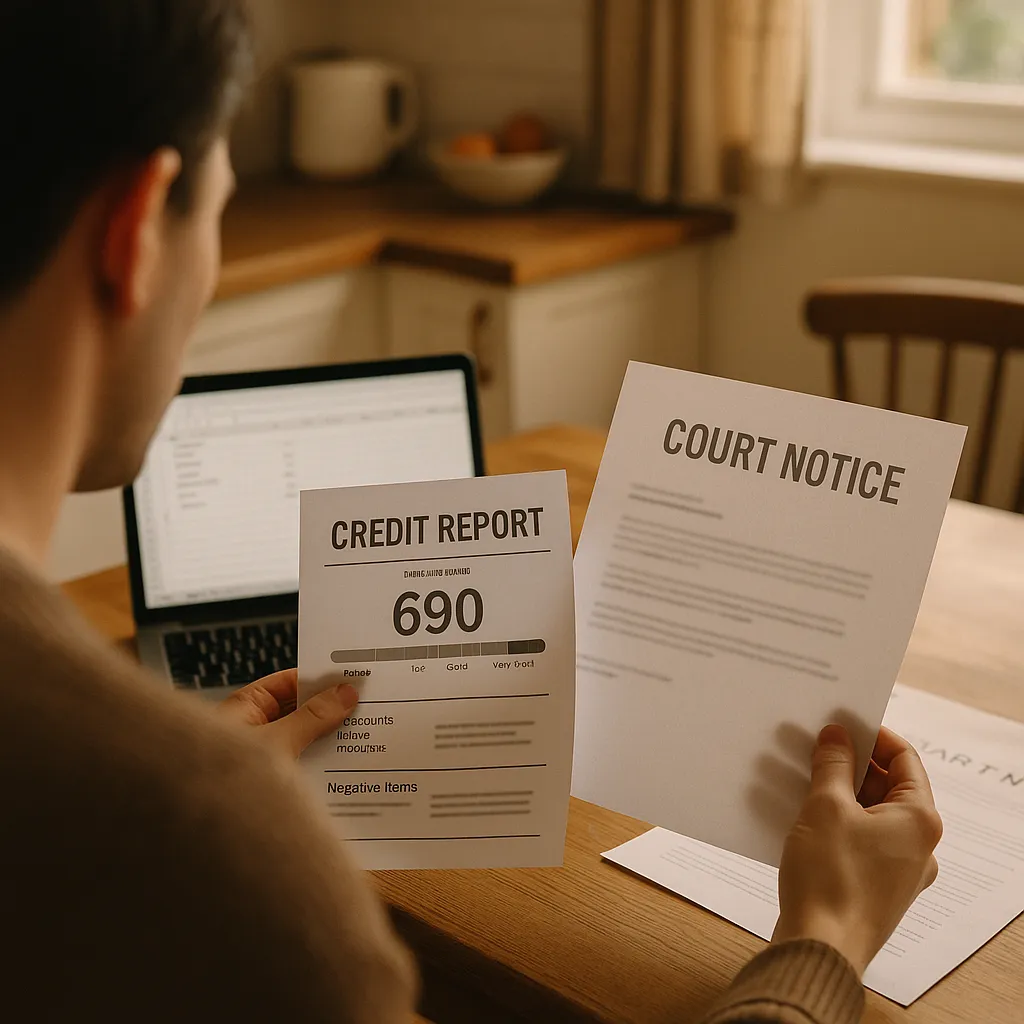
Satisfied vs Unsatisfied CCJs (Why This Changes Offers)
If you’re comparing CCJ loans, you’ll see lenders talk a lot about whether the judgment is satisfied.
- Satisfied CCJ: the debt has been paid. The record can still remain for up to six years from the judgment date, but it shows you’ve resolved it.
- Unsatisfied CCJ: the debt is still unpaid (or not marked as paid). This can be a bigger red flag because it suggests ongoing arrears.
In many cases, a satisfied CCJ can mean:
- a better chance of approval than an unsatisfied CCJ
- more realistic loan amounts
- APR that may still be high, but not the very highest tier
If you’ve paid the CCJ, it’s worth checking your credit files to make sure it’s recorded correctly. GOV.UK explains how to get a CCJ marked as satisfied (and how paying within one month can allow removal from the register) here: CCJs and your credit rating.
How a CCJ Can Affect APR and Borrowing Limits
With CCJ loans, the trade-off is usually cost and flexibility:
- Higher APR: a CCJ can push you into a higher-risk pricing band.
- Lower limits: lenders may reduce the amount offered until you’ve rebuilt a track record.
- Shorter terms (sometimes): some lenders limit terms to manage risk.
But there’s another factor that can matter just as much as the CCJ itself: your current affordability. Even if your credit file is improving, you can still be declined if the numbers don’t stack up.
If you’re weighing up a loan for consolidation, it helps to compare the total cost, not just the monthly figure. Our broader guide 7 Steps to Obtaining Loans With Bad Credit covers the basics of APR vs interest rate and what lenders consider.
Decision Guide: Is a CCJ Loan a Good Idea for You?
Use this quick decision flow to pressure-test whether borrowing makes sense right now:
- Is the CCJ debt still unpaid?
- If yes: consider paying/agreeing a plan first. Borrowing to cover an unpaid judgment can compound the problem.
- Are you up to date on priority bills? (rent/mortgage, council tax, utilities)
- If no: sort these first. A loan doesn’t fix a cashflow gap if essentials are already behind.
- Is the loan for a one-off cost or to plug ongoing spending?
- One-off + clear plan: can be reasonable.
- Ongoing overspend: look at budgeting support or debt advice first.
- Can you afford repayments even if costs rise?
- Stress-test your budget (food, fuel, childcare, energy). If the repayment only just fits, it’s risky.
CCJ Loans Checklist (Before You Apply)
Doing a little prep can improve your chances and reduce the chance of repeated declines.

- Check your credit files with the main UK credit reference agencies and note what’s actually recorded (including CCJ dates and status).
- Confirm satisfied status if you’ve paid (keep proof of payment).
- Stabilise your basics: make sure you’re on the electoral roll and your address history is consistent.
- Reduce utilisation where you can (bringing balances down can help more than closing accounts).
- Build a simple income/outgoings sheet so you can choose a realistic amount and term.
- Avoid stacking applications: multiple hard searches in a short time can hurt. Where possible, start with eligibility checks.
Alternatives to CCJ Loans (Often Safer)
Depending on your situation, one of these can reduce cost and risk:
1) Credit-builder credit card (for rebuilding)
If your goal is to rebuild your score, a credit card with a manageable limit can help you build a positive repayment record. The key is to use it lightly and pay on time.
2) Borrow a smaller amount (and shorten the problem)
Sometimes the best “CCJ loan” is the one you don’t take. If you can borrow less, repay faster, and avoid rolling debt, you reduce the chance of another marker landing on your file.
3) Guarantor loan
A guarantor can make approval easier, but it shifts risk onto someone close to you. If you miss payments, it can damage their finances and your relationship. If you want to avoid that structure entirely, consider no-guarantor loans instead.
4) Secured borrowing
Secured loans can be available when unsecured credit isn’t, but your asset is at risk if you can’t repay. Only consider this if you’re confident the repayments are sustainable.
5) Debt advice if things feel unmanageable
If you’re juggling multiple debts, free, independent debt advice can help you map out options. Citizens Advice is a good starting point: Debt and money advice.
Myths and Red Flags (Read This Before Clicking “Apply”)

- Myth: “Guaranteed approval CCJ loans exist.”
Fact: regulated lenders still need to assess creditworthiness and affordability. “Guaranteed” can be a sign of a high-cost product or a scam. - Myth: “A satisfied CCJ disappears immediately.”
Fact: paying it can improve how it’s viewed, but the record can remain for up to six years unless paid in full within one month and removed. - Myth: “One declined application doesn’t matter.”
Fact: repeated applications can leave footprints and lower your chances for the next lender. - Red flag: Upfront fees for a loan you haven’t received, especially if the lender is vague about FCA authorisation.
How 118 118 Money Can Help
If you’ve got imperfect credit and you’re exploring CCJ loans, 118 118 Money loans are designed for people who may not fit high-street criteria. We never ask for a guarantor, and we focus on responsible lending based on status and affordability.
If you’re not sure whether a loan is right for you, you can also look at our Money Guidance hub for practical, plain-English support.
Check your options without guessing
Explore borrowing and credit-building routes that fit your budget today.
FAQ: CCJ Loans
Can you get a loan with a CCJ?
Yes, it can be possible to get a personal loan with a CCJ, but your options may be more limited and the APR may be higher. Lenders typically look at whether the CCJ is satisfied, how recent it is, how many you have, and whether your current income and outgoings support the repayments.
Is it easier to get CCJ loans if the CCJ is satisfied?
Usually, yes. A satisfied CCJ shows the debt has been paid, which can reduce perceived risk versus an unsatisfied CCJ. It may still affect offers for up to six years from the judgment date.
How long does a CCJ affect your ability to borrow?
A CCJ is typically visible on your credit file for six years from the judgment date. If it is paid in full within one month, you can apply for it to be removed from the public register and your credit file can update accordingly.
Do CCJ loans exist with guaranteed approval?
Be cautious. Legitimate lenders cannot guarantee approval to everyone because they must carry out affordability and creditworthiness checks. Claims of guaranteed approval can be a red flag for high-cost or scam offers.
What are alternatives to CCJ loans?
Depending on your situation, alternatives can include a credit-builder credit card, borrowing a smaller amount, using a guarantor loan, considering a secured loan, or speaking to a free debt adviser if you are struggling with multiple debts.